The Mourning Dove
A quiet symbol for a loud and unsteady time

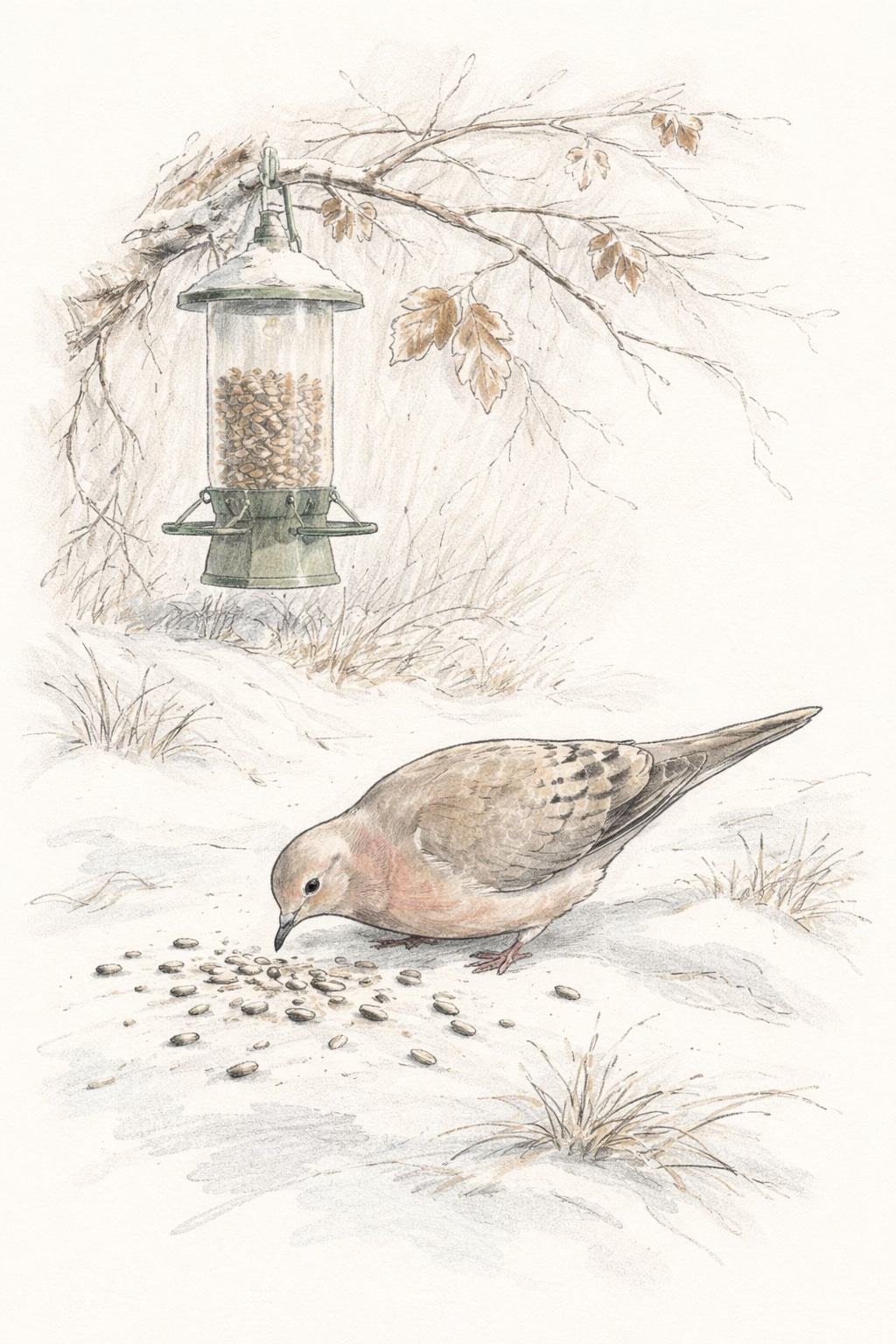
I saw a mourning dove today — January 7th, 2026 — in northern Massachusetts, near the New Hampshire border.
It was in my front yard, standing on the snow beneath the feeders, poking around patiently for fallen sunflower seeds. No hurry. No drama. Just doing what it needed to do to get through the day.
Mourning doves do migrate, but they’re short-distance, partial migrants. Some head south in winter. Others stay put if conditions allow. In milder winters, it isn’t unusual for them to remain. So the sighting itself wasn’t rare.
What caught my attention was the timing.
No spectacle. No announcement. Just there — calm, watchful, unbothered by the noise of the world.
The Mourning Dove is not rare, yet when one appears, people notice. They pause. They lower their voice. Something about the bird asks for attention without demanding it.
That feels relevant right now.
We’re living in an age of constant provocation. Outrage travels faster than thought. Volume substitutes for truth. The loudest actors dominate the stage while the rest of us are left bracing — for the next shock, the next threat, the next fracture.
The mourning dove offers a different posture.
Its call sounds like grief, but it isn’t panic. It’s not alarm. It’s steady. Repetitive. Almost meditative. In folklore and collective memory, that sound has come to represent grief that has already been carried for a while — sorrow that has been absorbed into the body and learned from.
That distinction matters.
Right now, many of us are grieving something that hasn’t fully ended. Institutions we trusted. Norms we assumed were permanent. A sense of safety that used to feel ordinary. This is not acute grief. It’s ongoing. It’s the kind you live alongside while still making dinner, still showing up, still caring for people you love.
The mourning dove doesn’t flee that kind of grief. It stays.
Biologically, it’s a tough bird. It survives cold. It adapts to disruption. It finds sustenance in imperfect places — roadsides, backyards, edges. It doesn’t dominate territory or fight for attention. It persists.
Symbolically, that endurance has always been the point.
Across cultures, the mourning dove has been read as a sign of peace — not as victory, but as steadiness. Not the end of conflict, but the refusal to become the conflict. A reminder that gentleness can be a form of strength, and that quiet is not surrender.
In a world addicted to escalation, that’s a radical message.
We are being trained to react, to harden, to choose sides instantly and permanently. The mourning dove models something else: attentiveness without aggression, presence without performance.
It doesn’t ask us to disengage. It asks us to remain human.
When one shows up, the meaning people attach to it is rarely dramatic. It usually lands as reassurance. As permission to feel what you feel without being consumed by it. As a reminder that grief and love often coexist.
That feels like the work now.
Witnessing. Remembering. Choosing not to mirror the cruelty we’re surrounded by. Holding space for sorrow while continuing to act with care.
The mourning dove doesn’t fix the world. It doesn’t promise resolution. It simply stays, calling softly, as if to say: life continues, even here.
That may be the most honest symbol we have right now.
Join My Team
Independent and unbought — a Word Busker who names what others won’t, sustained by readers like you.
You can send a one-time tip on Venmo @joycestrong — every bit helps keep the lights on and the words flowing strong.
Or, if it fits your budget, become a paid subscriber to support ongoing reporting, songs and essays.
And if you choose to become a founding member, I’ll write you a song — a personal thank-you for helping keep this work alive.
— Joyce
We have several of these lovely creatures who dine at our seed buffet, along with Bluebirds and finches, and of course Max, the squirrel.
I call them ‘Pascal’ because they seem so pensive, as they may sit in one spot for half an hour. Deep birds.
I love this essay. It brings our real world to the forefront and leaves the human-made mess in the background. And I am always incredibly comforted by the haunting but peaceful call of the mourning dove.