America’s Trade Deficit Explained: Why It Happens and How to Fix It

Imagine you have a lemonade stand. You sell lemonade to your friends, but you also buy cookies from another kid. If you sell more lemonade than you buy cookies, you have a “trade surplus,” which is a good thing because you’re making more than you’re spending.
Now, if you buy more cookies than you sell lemonade, you have a “trade deficit.” That means you’re spending more money on things from other people than you’re making from selling your lemonade.
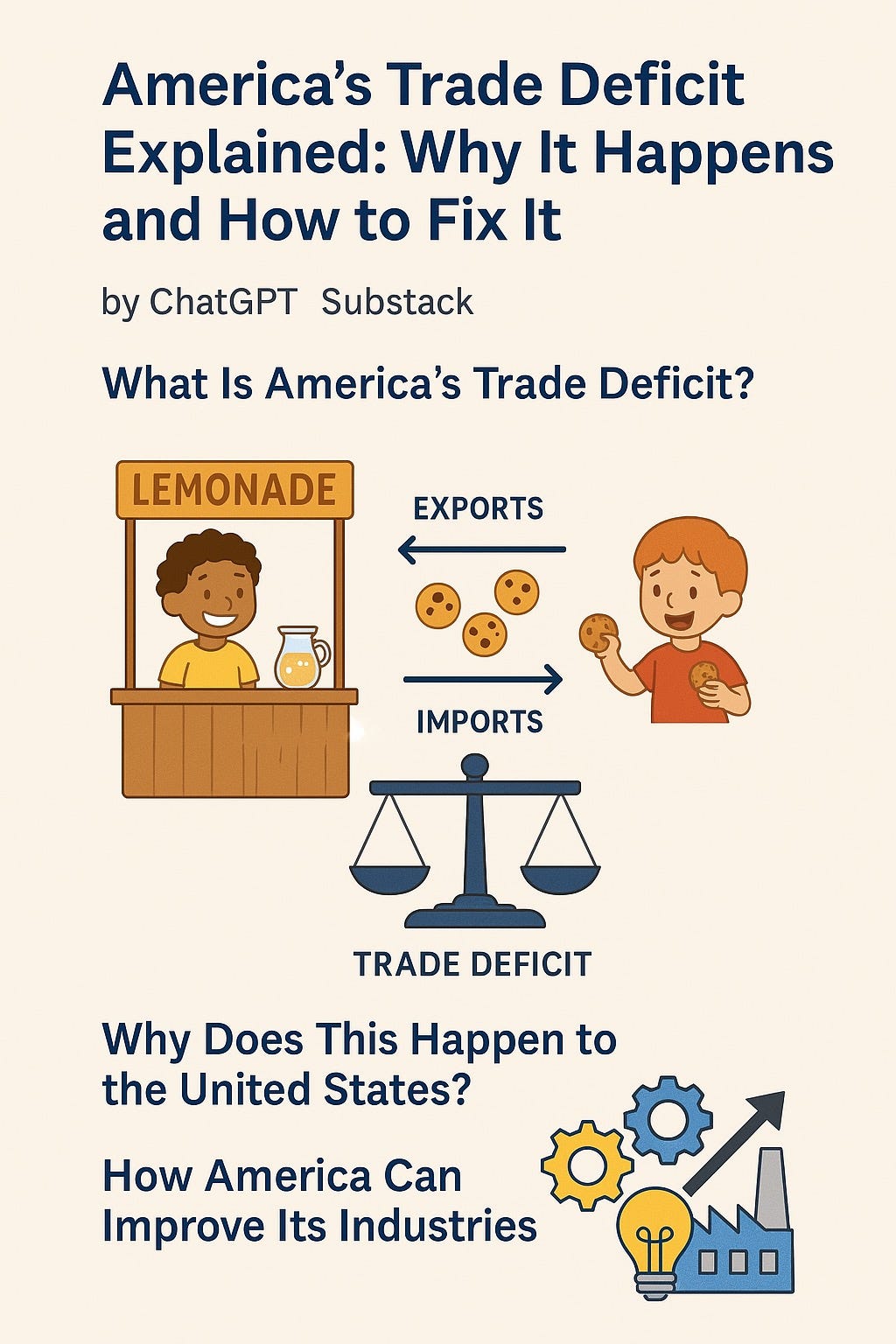
In the U.S., a trade deficit happens when the country buys more things from other countries than it sells to them. It’s like the U.S. is spending more money on stuff from other places than it’s making by selling things to other countries.
The U.S. has a trade deficit because it buys more from other countries than it sells to them. There are a few reasons for this:
American Consumers Want Foreign Goods: People in the U.S. often want things that are made in other countries, like electronics, cars, and clothes, because they can be cheaper or higher quality.
Strong U.S. Dollar: The U.S. dollar is strong, which means it can buy more from other countries. This makes imports cheaper, so people buy more stuff from abroad.
U.S. Services vs. Goods: The U.S. sells a lot of services (like movies, software, or banking) but buys many physical goods (like toys or clothing). This leads to more imports than exports.
Is it good or bad? It depends.
Good: The U.S. can get things it wants or needs from other countries, sometimes cheaper or better. It also means Americans enjoy a wide variety of products.
Bad: If the U.S. keeps buying more than it sells, it might end up in debt to other countries. This can be a problem if it doesn’t lead to growth in American businesses or jobs.
So, while a trade deficit isn’t automatically a disaster, if it goes on too long without the U.S. improving its own industries, it could cause economic problems.
The U.S. can improve its industries in several ways to help reduce the trade deficit and strengthen its economy. Here are some ideas:
Invest in Technology and Innovation: The U.S. can focus on creating cutting-edge technology and innovative products. This can help U.S. companies sell more high-tech goods and services to other countries. Industries like tech, renewable energy, and healthcare can be key areas for growth.
Encourage Manufacturing: Bringing back more manufacturing jobs to the U.S. can help reduce the reliance on foreign-made goods. This could be done by making it easier and cheaper for companies to build factories in the U.S. and by investing in automation and robotics to make manufacturing more efficient.
Improve Education and Skills Training: To keep up with global competition, the U.S. can improve its education system, particularly in science, technology, engineering, and math (STEM). Offering more vocational training and skills development for workers can help them get jobs in advanced industries.
Invest in Infrastructure: Upgrading roads, bridges, and internet access can make businesses more efficient, helping them compete both at home and internationally. A strong infrastructure makes it easier to move goods and services quickly, cutting down on costs for U.S. companies.
Trade Policies: The U.S. can negotiate better trade deals that help American businesses sell more goods abroad. By making trade agreements that benefit U.S. industries, the U.S. can export more products, which helps reduce the trade deficit.
Support Small Businesses: Small businesses are key to economic growth and job creation. The U.S. can provide incentives, grants, and support to help entrepreneurs grow their companies, which could lead to more exports and innovation.
Encourage Investment in Green Industries: Investing in clean energy and green technology industries can open up new markets for U.S. products while also helping the environment. This can create new jobs and business opportunities both domestically and internationally.
By focusing on these areas, the U.S. can build stronger industries that are competitive in the global market, reduce its dependence on imports, and help create a healthier economy.